Consumers want objects with origin and taste, but most marketplaces flatten both into commodity product.
Textile-led global discovery brand
Ali Dandin premium textiles
Ali Dandin is a premium textile brand built around provenance, material intelligence, and destination-led collections.
The brand pairs tightly curated textile drops with editorial storytelling and sourcing discipline, creating a path from signature collections into private label, selective partnerships, and broader lifestyle reach.
Investment frame
- One collection-led brand world rather than a broad lifestyle catalog.
- Material authority anchored in sourcing fluency, provenance, and editorial restraint.
- Scale driven by repeat collections, stronger pricing, and premium customer trust.
$9.35M
Year 3 revenue
Product, membership, and partnership revenue compound through collection cadence.
55%–65%
Gross margin target
Premium textile positioning supports stronger pricing than generic sourced goods.
Kyoto
Opening collection
The launch story establishes the full brand system through one place, one process, one material.
3
Scale phases
Discovery brand, textile authority, and broader lifestyle expansion.
Documents
Business plan, investor deck, and financial model.
| Document | Description |
|---|---|
| Business Plan | Business plan document. |
| Investor Deck | Investor presentation deck. |
| Financial Model | Financial model workbook. |
Brand Thesis
Ali Dandin defines a focused position in global textile commerce.
Ali Dandin operates as a textile-led discovery brand centered on provenance, material intelligence, and destination-led collections.
Destination-led textile collections paired with story, curation, and an editorial storefront.
Ali’s textile background supports sourcing judgment, supplier language, and product credibility.
Brand Identity
The visual and verbal frame is premium, traveled, and materially literate rather than trendy or souvenir-led.
The brand is the world’s textile discovery brand. The tone is calm, exacting, and editorial. Midnight blue, sand, and cream hold the system together, with terracotta or olive used sparingly. The headline voice is that of a curator with taste rather than a hype-forward DTC founder.
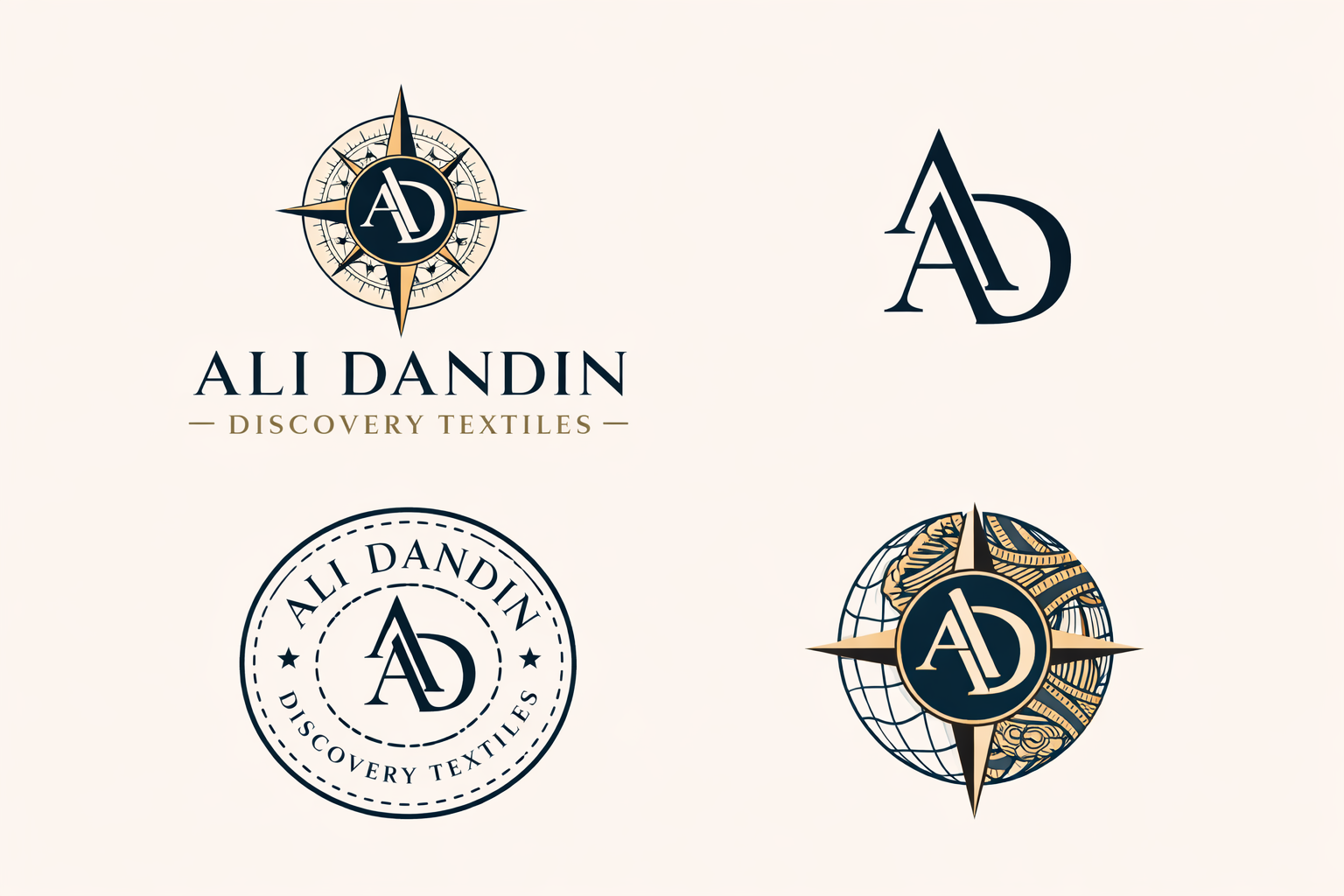
Compass-led wordmark for storefront, packaging, and brand headers.
Small-format mark for social avatars, tags, and future favicon use.
Useful collection stamp for destination pages, inserts, and drop graphics.
Symbolic brand emblem linking geography, material, and discovery.
Collection Architecture
A single destination collection creates more coherence than a wide, mixed catalog.
Kyoto Indigo establishes the opening collection, combining material, dye process, and cultural origin into a cohesive product system. It establishes an immediate point of view: material, dye, craft, and origin all read clearly without requiring explanation-heavy merchandising.
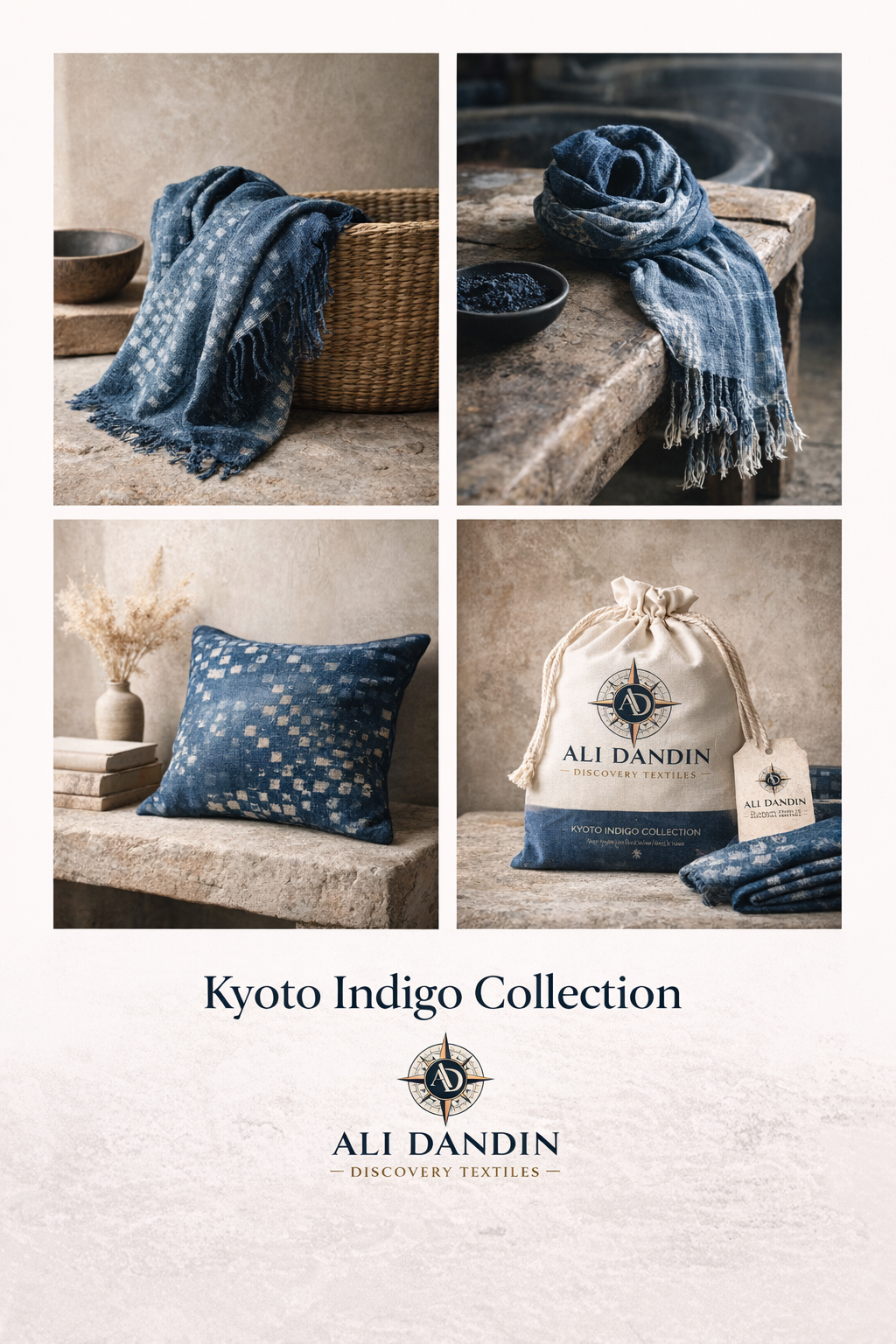
- Indigo Linen Throw
- Indigo Scarf
- Indigo Pillow
- Indigo Textile Set
- Name by destination and material, not by generic ecommerce convention.
- Keep every product tied to process, place, and use.
- Let packaging reinforce origin and collector value.
Investment Case
Ali Dandin is positioned as a specialized authority in premium textiles.
Premium textiles provide a strong foundation for margin, repeatability, and expansion into private label.
Content creates trust, trust drives curated drops, drops generate proof, and proof deepens content.
Collections first, then membership, collaborations, selective licensing, and retail partnerships.
What makes the thesis defendable is not just travel content. It is the combination of curation taste, textile expertise, supplier fluency, and an ability to turn those into premium, place-led collections. The long-term value is not merely product margin. It is brand trust around material discovery.
Commerce Platform
The storefront translates destination-led collections into premium ecommerce with clear hierarchy and premium conversion logic.
The storefront centers large textile imagery, one featured collection, one artisan or process story block, and a disciplined product grid. The result feels editorial and premium rather than catalog-heavy.
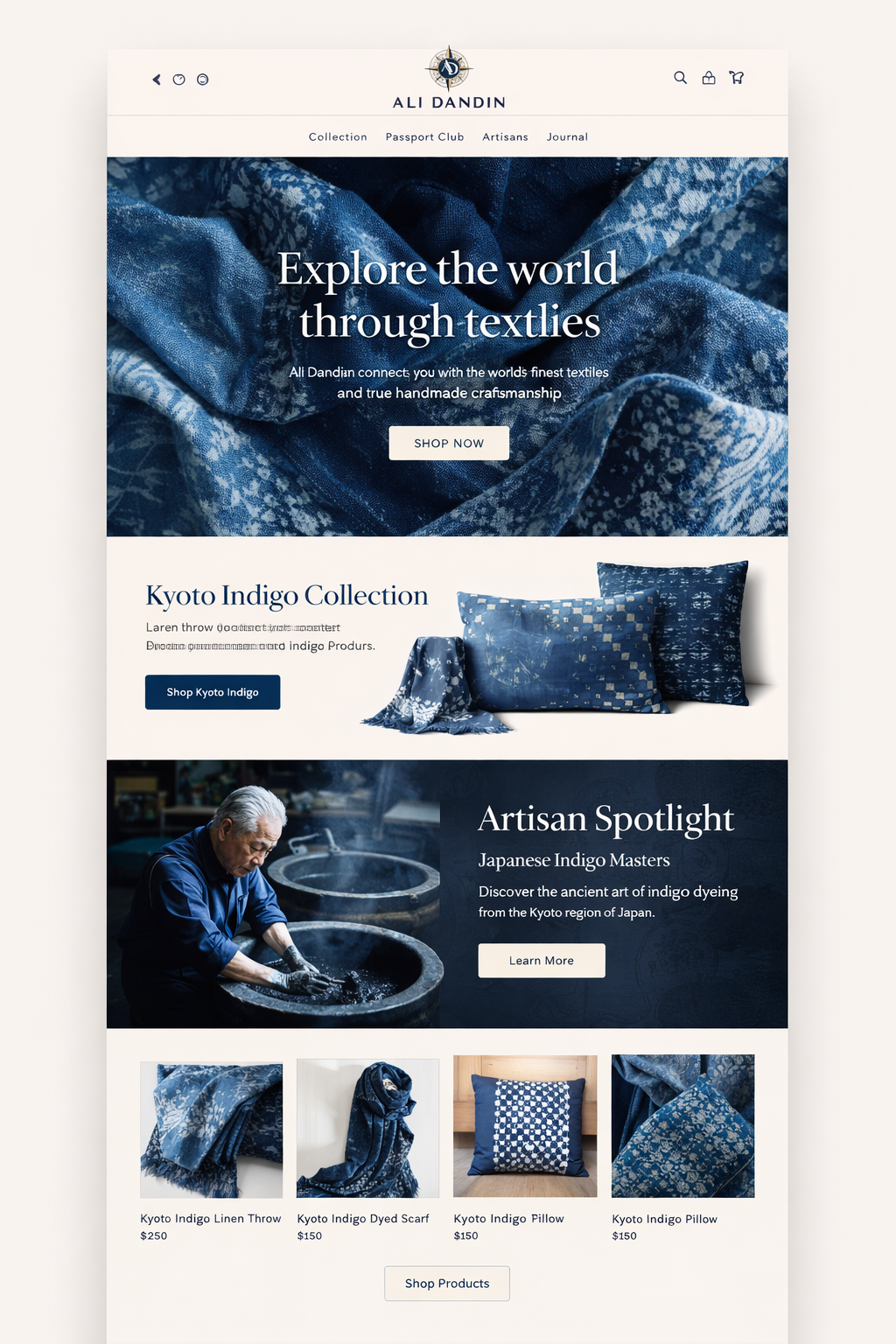
One featured collection carries the primary merchandising story instead of a broad assortment grid.
Material, process, and origin sit next to pricing and conversion rather than beneath them.
Passport Club capture extends customer value without overwhelming the main product narrative.
Sourcing Strategy
The sourcing system reinforces both product quality and brand credibility through regional expertise and disciplined assortment.
The sourcing model follows a consistent sequence: discovery, documentation, sample orders, and repeatability only after demand becomes visible.
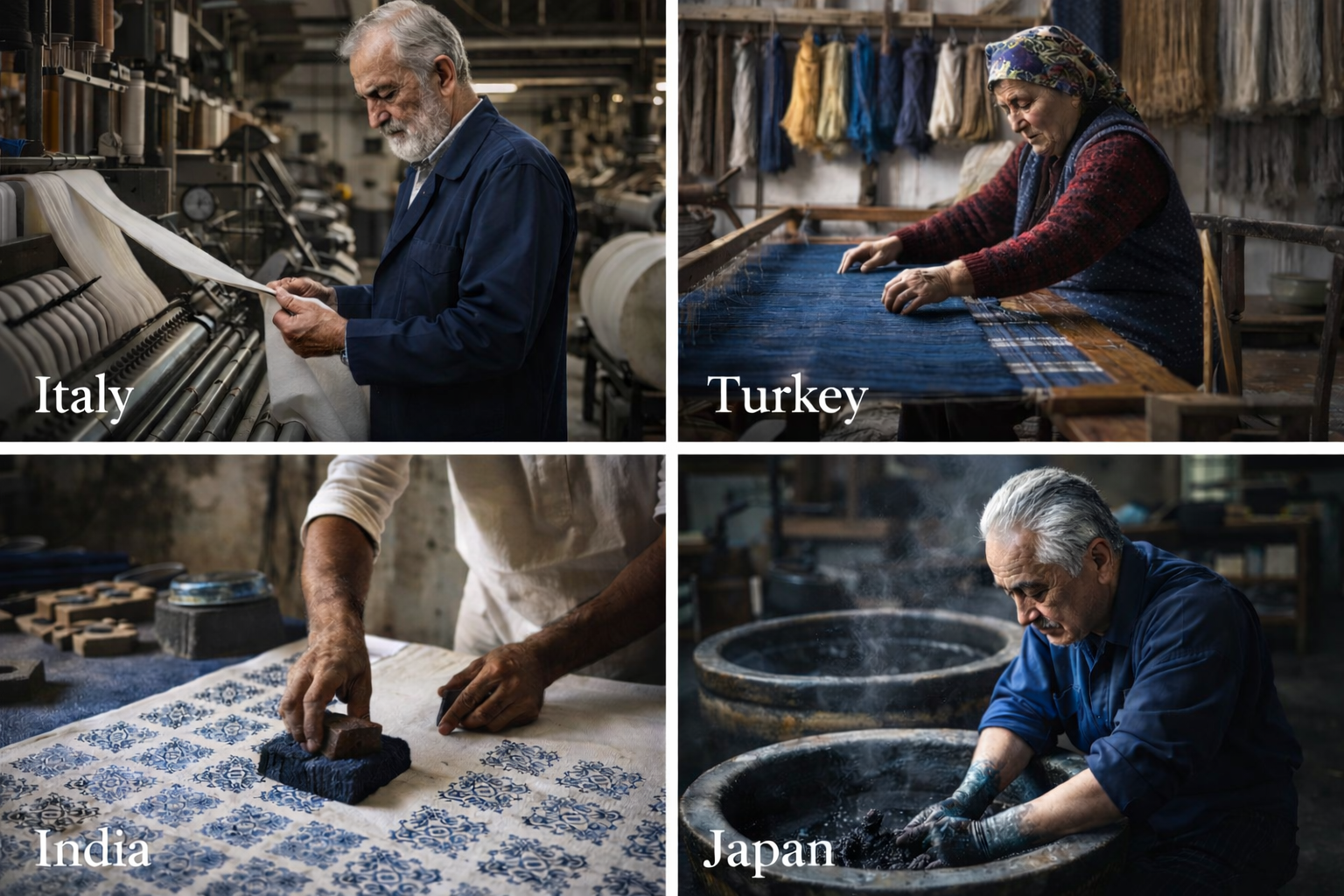
Premium linen and finishing credibility. Strong later-stage partner region.
Practical manufacturing depth for cotton, towels, throws, and scalable textile categories.
Rich process story: block printing, handloom, cotton, and craft-forward flexibility.
Hero region for indigo, heritage process, and the first premium collection story.
Future expansion region for alpaca, wool, and colder-climate luxury textiles.
Regional Network
- Italy: Albini Group, Canclini Tessile
- Turkey: Soktas Textile, Denizli textile network
- India: Arvind Mills, Anokhi workshops
- Peru: Michell Group
- Japan: Kuroki Mills, Kyoto heritage textile studios
- Documentation covers maker, process, region, and product category.
- Categories skew toward items that travel and fulfill cleanly.
- Sample orders and story capture sit close to the first collection logic.
- One lead collection per region is more visible than a mixed assortment approach.
Milan for context, Prato or mill districts for production, Florence for workshop and finishing references.
Istanbul for markets, Denizli for textile production, supplier conversations, and sampling.
Jaipur for block print and handloom, then larger mill context via Delhi or Ahmedabad.
Kyoto for indigo and heritage process, Osaka or Tokyo for supplier and logistics support.
Financials
Revenue mix, margin logic, and the core planning documents behind the Ali Dandin brand case.
The economic story is straightforward: premium textile collections establish proof, repeat launches deepen authority, and the brand expands into private label, membership, partnerships, and selective licensing as trust compounds.
Full written business plan covering the brand concept, product system, sourcing model, growth plan, and capital strategy.
Slide-style investor narrative covering positioning, collection logic, economics, and growth potential.
Structured financial planning view covering assumptions, unit economics, revenue growth, and capital requirements.
Four collection launches establish proof, pricing power, and early recurring revenue signals.
Audience growth and broader recurring revenue deepen the economics without diluting assortment discipline.
The platform reaches category authority through repeat collections, membership, and premium partnerships.
Growth Roadmap
The brand scales from discovery into authority and into systems that support long-term growth.
Destination-led textile collections, strong editorial storytelling, and a narrow assortment define the opening phase.
Repeat collections, deeper supplier discipline, and selective private label development broaden the platform.
Bedding, throws, home textiles, licensing, and prestige retail define the broader expansion layer.
The long-term upside is not just selling premium goods. It is owning a point of view consumers and partners trust when they want taste, provenance, and material literacy in one place.