Three-year scale path anchored by product, membership, and partnership revenue.
Ali Dandin business plan
Ali Dandin premium textiles
Ali Dandin is a textile-led discovery brand centered on provenance, material intelligence, and destination-led collections. The business combines premium product curation, editorial storytelling, and direct-to-consumer commerce into a brand that can expand from curated drops into signature lines, private label, and selective partnerships.
The strategic edge comes from Ali’s textile background. The brand is not built on generic travel commerce or broad marketplace aggregation. It is built on judgment: knowing what materials are worth backing, where the strongest processes live, how to source responsibly, and how to translate that into a premium product and brand narrative.
Executive summary
Ali Dandin enters the market as a premium textile brand with a clear point of view: one destination-led collection at a time, one strong material story at a time, and one editorially coherent storefront that makes the brand feel specific rather than mass.
The opening collection, Kyoto Indigo, establishes the commercial pattern. Every product is linked to process, material, and origin. Each launch becomes both merchandise and media. Over time, that model supports stronger margins, repeat collections, private label development, and prestige partnerships.
Premium textile pricing with disciplined sourcing and direct-to-consumer distribution.
The first assortment establishes the full brand system in one coherent material story.
Discovery, authority, and broader lifestyle expansion.
Company Overview
Ali Dandin is built as a modern textile house rather than a generic lifestyle marketplace.
The company exists to bring culturally rooted textile products to market through a premium brand system that combines sourcing, design judgment, and editorial storytelling.
The brand’s long-term ambition is to become the world’s most trusted textile discovery platform. That ambition starts narrowly. The first phase is not a broad assortment of travel goods. It is a focused product and brand architecture in which textiles lead every decision: category selection, supplier relationships, visual language, pricing, and channel strategy.
Core identity
- Premium textile brand with global sourcing roots
- Destination-led collections rather than commodity catalog SKUs
- Editorial brand voice anchored in material literacy and provenance
- Direct-to-consumer first, with later retail and partnership expansion
Bring exceptional textile products from distinctive places into a coherent premium brand world.
Become the leading authority in premium, globally sourced textile discovery and curation.
A category-defining textile brand with strong product margins and durable storytelling power.
Market Opportunity
Consumers increasingly want products with origin, craft, and taste embedded in them.
The market opportunity sits at the overlap of premium home textiles, artisanal product commerce, and content-led direct-to-consumer brands. Many existing players compete on breadth, convenience, or trend turnover. Few own a defensible position around material literacy and destination-led curation. Ali Dandin fills that gap.
Buyers in premium home and lifestyle categories respond to provenance, texture, design taste, and perceived authenticity.
Textiles support healthy price architecture, repeat purchasing behavior, and later private label margin expansion.
There is room for a brand that feels globally literate and editorial without becoming bohemian or mass-premium.
Design-conscious consumers, specialty gift buyers, home-oriented professionals, and culturally curious shoppers who want products that signal taste and origin rather than trend-chasing.
The comparison set includes premium home brands, artisanal marketplaces, and content-led commerce brands. The category advantage comes from textile specialization rather than general-store breadth.
Brand Positioning
Ali Dandin is positioned as a specialized authority in premium textiles.
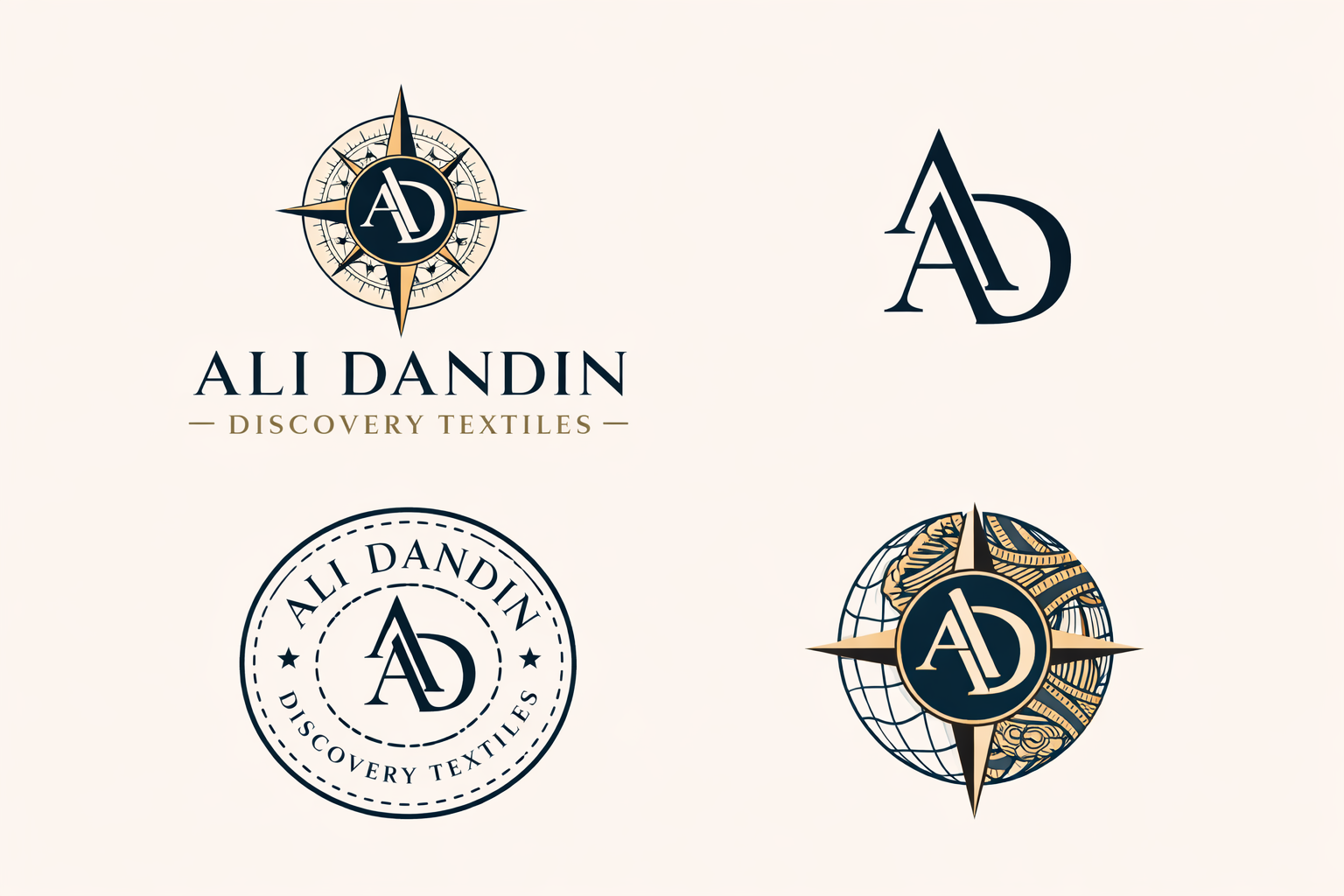
The brand tone is precise, restrained, and materially intelligent. It does not read as a souvenir shop, creator merch label, or broad travel lifestyle project. It reads as a textile house with global reach.
- Primary message: premium textiles shaped by place, process, and curation
- Visual system: midnight blue, sand, cream, with terracotta and olive used sparingly
- Voice: editorial, calm, informed, and culturally literate
- Brand symbols: primary mark, AD monogram, passport stamp, textile globe
Product Strategy
The opening collection demonstrates the company’s commercial and aesthetic logic in one move.
Kyoto Indigo serves as the opening collection because it combines material clarity, process depth, and strong cultural association in a way that translates cleanly into product, imagery, and story.
The launch assortment stays narrow. A small, disciplined range creates better merchandising, better storytelling, and better operational control than a broad assortment. Each item earns its place by expressing the same destination story in a different use case.
- Indigo Linen Throw
- Indigo Scarf
- Indigo Pillow
- Indigo Textile Set
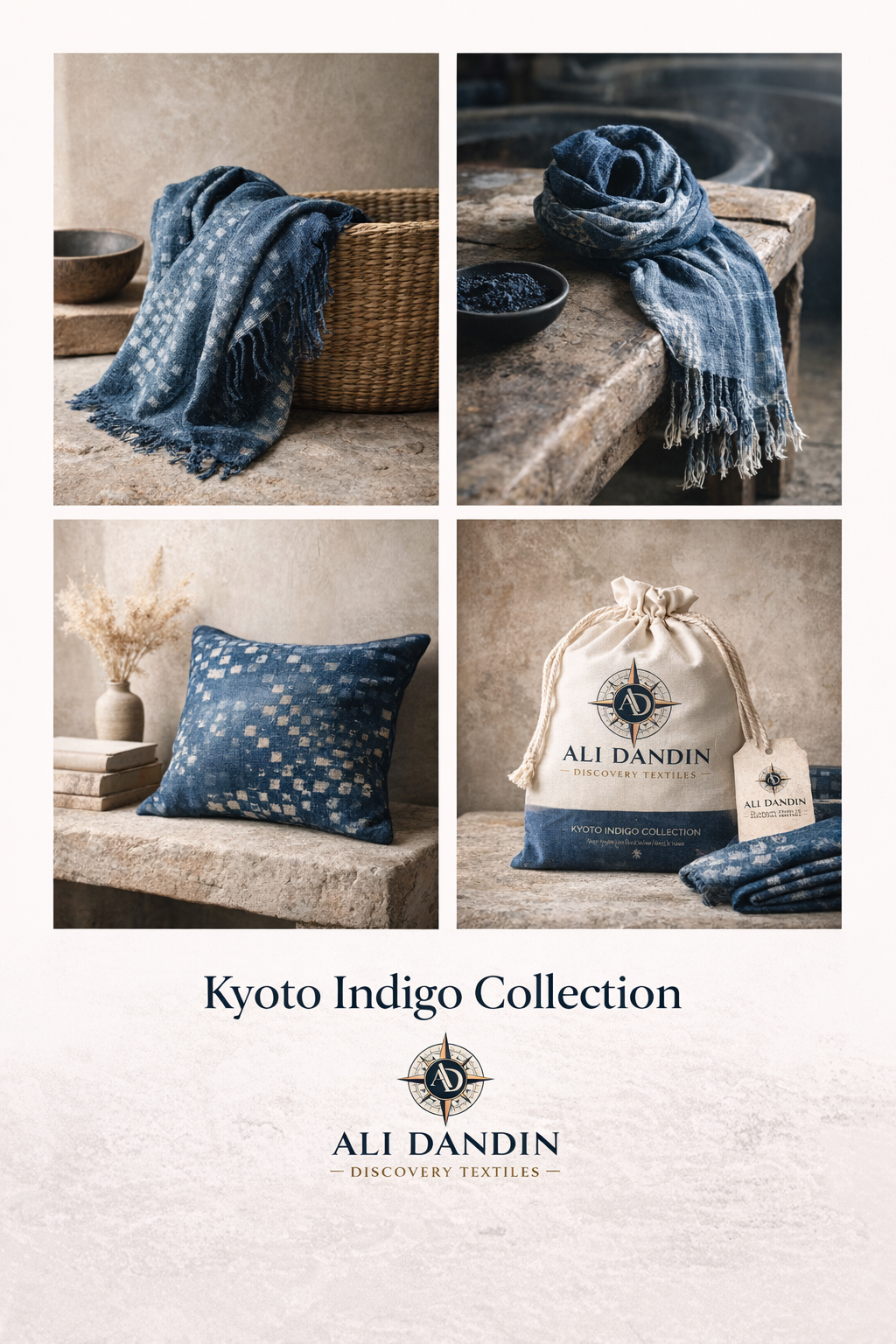
Throws, scarves, pillows, table linens, and textile accessories create the first scalable product ladder.
Premium pricing is supported by provenance, material quality, and a curated release structure rather than commodity comparison.
Over time the range extends into bedding, signature linens, seasonal collections, and selective private label programs.
Business Model
The company monetizes product first, then layers in recurring and higher-margin revenue streams.
Direct-to-consumer sales of destination-led textile collections.
Membership, collaborations, affiliate income, and later selective licensing.
Private label lines, retail partnerships, and prestige distribution.
Product margin improves when the brand owns both curation and customer trust. A clear point of view allows the company to price above generic travel-sourced goods and avoid competing on breadth or discounting.
Collections establish the brand. Membership deepens customer ownership. Private label increases margin. Partnerships and licensing extend reach without requiring the brand to become operationally indiscriminate.
Go-To-Market Strategy
The go-to-market model uses content and commerce as a single system rather than separate channels.
The customer acquisition model begins with story: the destination, the material, the maker, and the product. That story is then translated into an editorial storefront and a tightly curated release calendar. The launch strategy prioritizes clarity over volume. One strong collection, one strong visual system, and one coherent narrative outperform a scattered multi-category debut.
Shopify storefront, Instagram, short-form video, email capture, and editorial brand content.
Content builds trust; trust lifts conversion; launches create momentum; repeat launches deepen authority.
Brand-building content, maker stories, destination context, and product education rather than heavy discount-led performance tactics.
Operations & Sourcing
The sourcing system is designed around authenticity, documentation, and controlled batch size.
The operating model begins with direct sourcing and disciplined assortment. The brand identifies regions with strong textile credibility, documents the process behind the product, evaluates shipping and durability, and then scales only the products that hold both brand value and operational feasibility.
- Document maker, process, region, and material details
- Favor products that travel, store, and fulfill cleanly
- Test categories through disciplined small-batch releases
- Move from curation toward repeatable supplier relationships over time
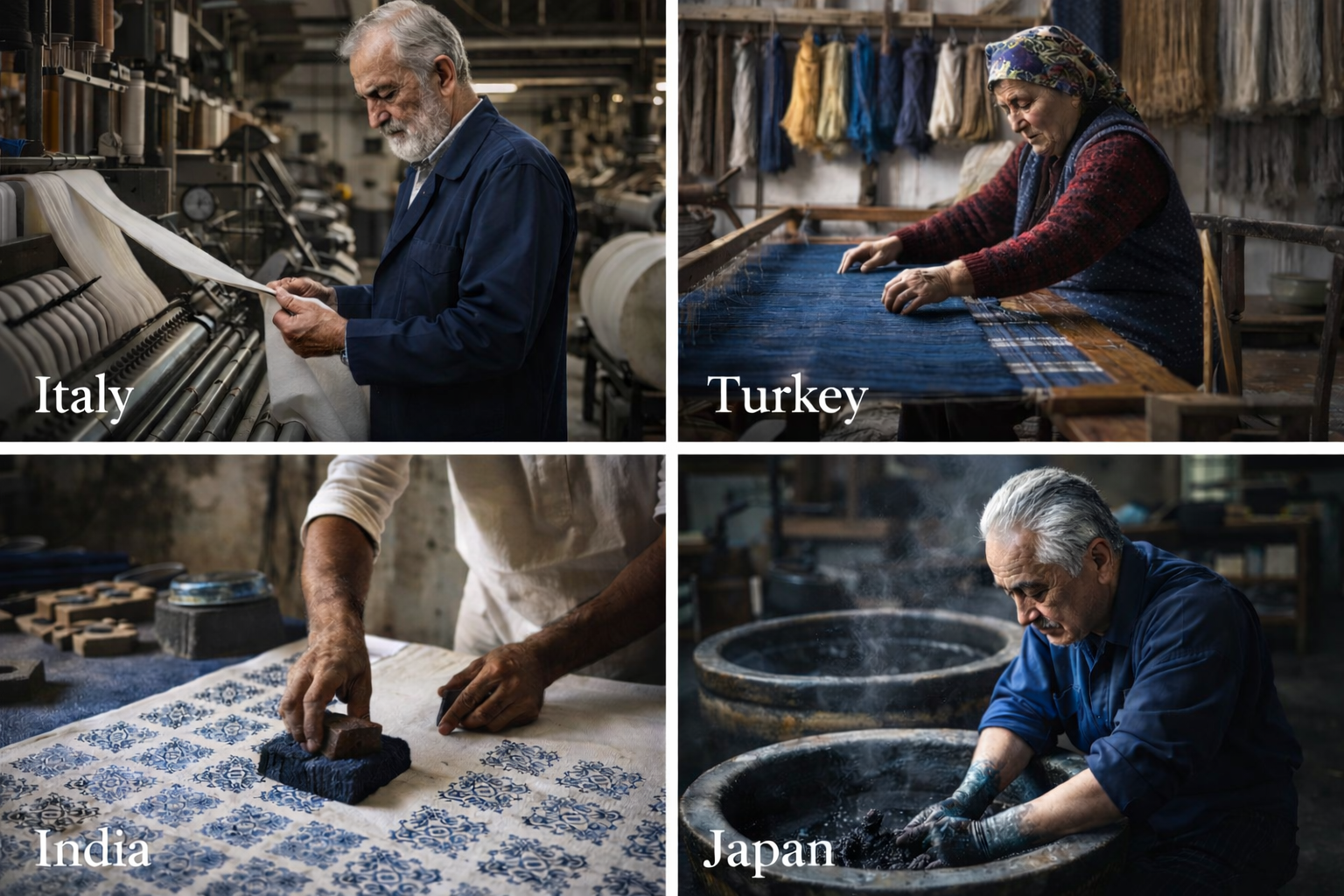
| Region | Strategic role | Priority categories |
|---|---|---|
| Japan | Hero collection region for indigo, heritage processes, and first-brand authority | Throws, scarves, small textile accessories |
| India | Craft process depth and flexible category expansion | Block print textiles, table linens, cotton accessories |
| Turkey | Scalable production for cotton and home textile categories | Towels, throws, woven goods, foundational textile lines |
| Italy | Later-stage premium finishing and luxury textile credibility | Linen, elevated table linens, prestige home textiles |
| Peru | Future luxury expansion for fiber-led cold-weather categories | Alpaca, wool, blankets, winter-weight textiles |
Commerce Platform
The storefront is editorial, premium, and collection-led rather than catalog-heavy.
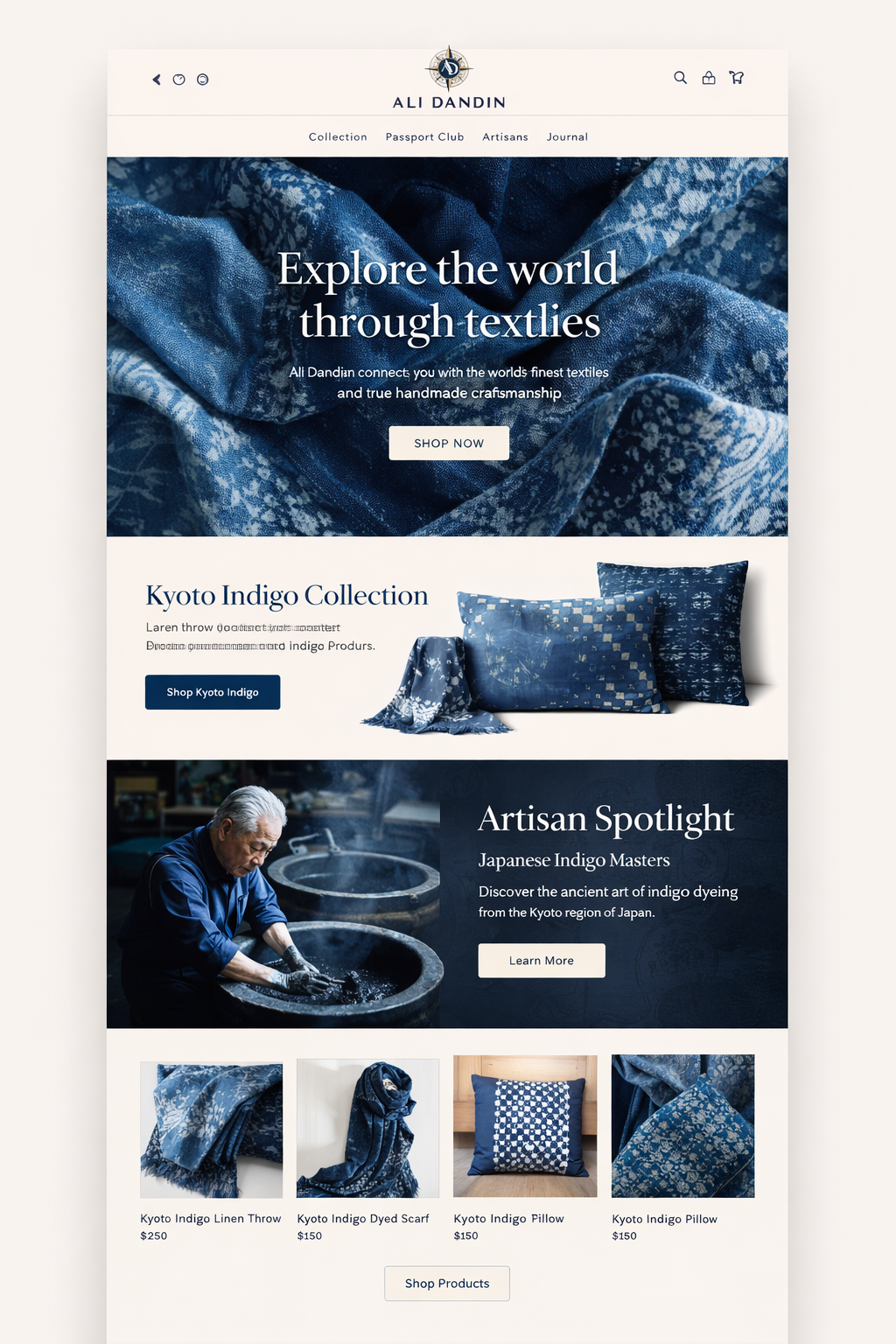
The commerce platform presents one clear featured collection, one supporting artisan or process story, and one disciplined product grid. That hierarchy protects the premium position and prevents the site from becoming visually noisy or operationally scattered.
- Homepage anchored by one featured collection
- Collection pages organized by destination and product family
- Product pages structured around material, process, and origin
- Email capture and membership integrated without overwhelming the brand experience
Financial Plan
The planning model assumes a premium price architecture and disciplined collection growth.
The financial case is built on narrow assortment, premium average selling prices, and content-driven acquisition. That combination produces a cleaner scale path than a broad catalog model and preserves the premium character of the brand.
50K audience, 4 collections, and a product-led revenue mix establish the first proof point.
8 collections, 250K audience, and broader recurring revenue deepen the model.
12 collections and 1M audience establish the platform as a category authority.
55% to 65% blended margin through curated premium positioning and later private label improvements.
Primary spend categories include travel, team, content production, fulfillment, packaging, and paid amplification.
Small-batch collection logic reduces early inventory exposure while preserving brand specificity.
Growth Roadmap
The business scales in three clean phases: discovery, authority, and lifestyle expansion.
Authority is established through tightly curated launches, strong brand imagery, and one destination-led collection at a time.
Repeatable collections, deeper supplier relationships, and signature private label categories define the next phase.
Bedding, table linens, broader home textiles, selective licensing, and prestige retail partnerships broaden the platform.
A high-trust discovery platform that monetizes through product, partnerships, and distribution leverage while retaining its core identity as a premium textile authority.
The brand becomes more valuable as it owns repeatable design language, higher-margin proprietary products, and a customer relationship that extends beyond one-off drops.
Risk Management
The strongest early risks are concentration risk, supplier variability, and over-expansion.
If the brand becomes too dependent on personality without building product authority, it weakens long-term value.
Artisan and regional production can vary in consistency, lead time, and scale. The business must expand methodically.
Moving too quickly into broad categories can dilute the brand before the textile thesis fully hardens.
- Protect the textile-first positioning
- Grow through repeatable supplier systems
- Use small-batch launches to validate demand
- Maintain disciplined category expansion
Every new collection, region, or partnership reinforces the brand’s authority in premium textiles rather than distract from it.
Capital Strategy
The company is well suited to a staged capital path that preserves control early and invites growth capital later.
The most rational funding path starts with a controlled launch funded through founder capital, early product revenue, and limited preorder or membership support. Once the brand demonstrates audience traction, collection sell-through, and credible supplier relationships, outside capital becomes more attractive and less dilutive.
A later angel or seed round would support inventory scale, team build-out, richer content production, deeper supplier management, and the move from curated discovery into signature private label lines.
Illustrative use of funds
- Product development and inventory buys
- Travel and sourcing costs
- Brand and content production
- Ecommerce operations and fulfillment
- Selective team build-out across design, operations, and growth